
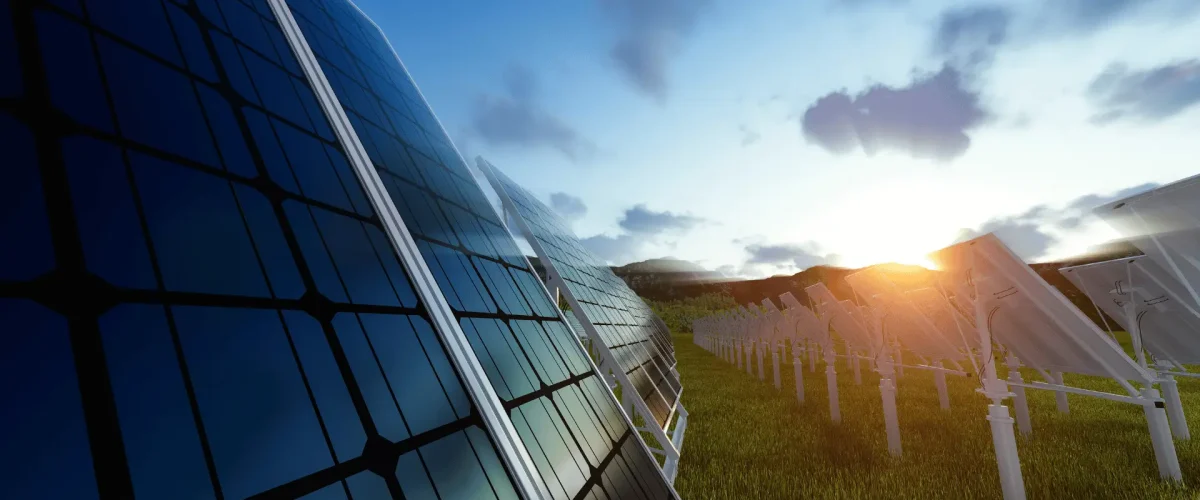
Solar energy has become one of the hottest methods that consumers and companies in the United States can use to save money on their electricity bills and lower their carbon footprint. If you have a lot of open land, solar panels that are mounted on the ground can be a good idea. However, the question many people ask themselves is: What is the cost of ground-mounted solar panels? This guide will dissect and discuss what determines costs and what you should expect to pay when you install a system.
What Are Ground-Mounted Solar Panels?
Solar energy systems mounted on the ground are referred to as ground-mounted solar panels, mounted on racks or frames on the ground as opposed to the roof. Ground-mounted systems are flexible with regard to location and size, unlike rooftop panels, which are constrained by the roof space and direction.
Advantages of Ground-Mounted Solar Panels
Placement flexibility: The angle of the roof is not of concern when installing since they are on the ground.
Easier to maintain: Ground systems are less difficult to maintain.
Scalable: It is easier to increase the system in case of increased energy requirements.
Optimal energy production: Can be oriented to get the maximum sunlight throughout the year.
Factors Affecting the Cost of Ground-Mounted Solar Panels
A ground-mounted solar system is subject to a number of factors in determining its cost. This knowledge can assist you in budgeting more efficiently.
System Size
One of the largest cost determinants is the size of your system expressed in kilowatts (kW). A bigger system is more expensive to install but generates more electricity.
Small systems (3-5 kW): Best suited to small houses or low energy requirements
Medium systems (6-10 kW): These are used in average-sized houses
High power (10 and above kW): Ideal in large houses or companies that use a lot of electricity
Type of Mounting System
Ground-mounted solar panels require racking systems, which vary in complexity.
Fixed racks standard: Panels are not mobile and are less expensive to install.
Adjustable racks: Enable you to adjust the angle with the season to make them more efficient.
Tracking systems: Move along with the sun to maximize production but are more costly.
Panel Type and Efficiency
Solar panels are available in different models such as monocrystalline, polycrystalline, and thin film.
Monocrystalline panels: More efficient, but more expensive at the start
Polycrystalline panels: A little bit less efficient but less expensive
Thin-film panels: Lightweight and flexible, but generally less efficient.
Installation Costs
The other important element of total cost is installation. Systems mounted on the ground are more labor intensive than rooftop panels since the ground system must have a firm base and be accurately installed. Depending on the location and complexity of the site, labor costs may vary.
Permits and Inspections
The overall cost may be enhanced by local building codes, zoning regulations, and permitting fees. It may cost between $500 and $2000 on average in terms of permit and inspections, depending on your municipality.
Maintenance Costs
Ground-mounted systems are generally easier to maintain than rooftop panels, but you may need to account for:
- Occasional cleaning
- Vegetation management
- Replacement of inverter after 10-15 years
Average Cost of Ground-Mounted Solar Panels in the U.S.
Throughout the year 2025, the average price of a ground-mounted solar panel system is between $2.50 to $3.50 USD per watt without incentives in the United States.
Let’s break this down:
| System Size | Estimated Cost Before Incentives | Estimated Cost After Federal Tax Credit |
| 5 kW | $12,500 – $17,500 | $8,750 – $12,250 |
| 10 kW | $25,000 – $35,000 | $17,500 – $24,500 |
| 15 kW | $37,500 – $52,500 | $26,250 – $36,750 |
This is dependent on the Federal Solar Investment Tax Credit (ITC) of 30 percent that can be utilized by homeowners.
Cost Breakdown
The cost is normally split in the following manner:
Solar panels: 40-50% of total cost
Inverters: 10-15%
Racking and mounting: 10-15%
Installation and labor: 20-25%
Permits and fees: 5%
How to Reduce Ground-Mounted Solar Panel Costs
There are several ways to reduce the upfront cost of installing a ground-mounted solar system:
Federal Tax Credit
Solar Investment Tax Credit (ITC) will enable you to claim 30 percent of your solar expenses on your federal taxes, which will reduce your expenditure greatly.
State and Local Incentives
Installation costs can be offset by rebates, incentives, or net metering programs depending on which state you live in.
Examples include:
California: Self-Generation Incentive Program (SGIP)
New York: NY-Sun Program
Texas: Exemption of solar equipment in property tax
Bulk Purchasing and Group Discounts
You can also receive a discount if you belong to a community solar program or buy several panels simultaneously.
Selection of a Simple Mounting System
Although tracking systems will maximize the production of energy, a standard fixed rack will be more economical in the immediate expenses but will give long-term benefits.
Ground-Mounted vs. Rooftop Solar: Cost Comparison
Although solar panels on the ground are generally more expensive to install than those on the roof, you can see the comparison below:
| Feature | Ground-Mounted | Rooftop |
| Cost per watt | $2.50–$3.50 | $2.00–$3.00 |
| Installation complexity | Higher | Lower |
| Flexibility in placement | High | Limited by roof |
| Maintenance | Easier | Harder to access |
| Expansion potential | High | Limited |
In short, ground-mounted systems can be more expensive initially, but can be more efficient and flexible in the long run.
Long-Term Savings and ROI
Solar panels mounted on the ground can help save thousands of dollars in the course of their existence. Depending on the size of the system and consumption of electricity, homeowners can save between $800 to $2000 a year on their electricity bills. Most systems can be recouped in 7-12 years, and because the panels have a lifespan of 25-30 years, it makes the long-term savings potentially enormous.