

Solar power in Connecticut works differently than in most states, and right now the numbers are moving fast. Eversource’s supply rate is 11.58 cents per kWh today, and the company filed a 14.93 cent winter rate with regulators to start January 1, 2027. Meanwhile the state locked its solar programs in place through 2035. This guide covers how solar power works in Connecticut, what the programs pay, and what changes in 2027.
Table of Contents
Table of Contents
Why Electric Rates Drive the Solar Decision Here
Connecticut homeowners pay for supply, delivery, transmission, and public benefits on every kilowatt-hour. The supply piece alone resets twice a year. Eversource filed its January 2027 standard service rate at 14.93 cents per kWh, a 29 percent increase over the current rate, pending PURA approval, and United Illuminating filed 15.65 cents. Source: Office of Consumer Counsel. Solar power attacks the whole per-kWh stack, because power you produce and use on site is power you never buy. Our full Eversource rate breakdown tracks every change.
How Connecticut Pays You for Solar Power
Connecticut replaced traditional net metering for new customers with the Residential Renewable Energy Solutions program, a 20-year tariff through Eversource or UI. You choose one of two structures, and both pay for solar power in Connecticut across 20 years.
The Netting Tariff
You use your solar power first and export the rest. Exports are credited at the retail rate. Systems enrolled in 2026 also pay a solar production charge of 4.02 cents per kWh of total production, a program change that makes honest proposal math more important than ever. Any company quoting savings without it is inflating your numbers.
The Buy-All Tariff
The utility purchases every kilowatt-hour your system produces at a fixed rate, 32.89 cents per kWh for 2026 enrollments, locked for 20 years, while you keep buying your power from the utility. Program details: PURA RRES page. PURA sets each year’s rates, and we confirm the current figures in every proposal. For the deeper history, read our Connecticut net metering guide.
The Programs Run Through 2035
Public Act 26-127, signed in July 2026, reauthorized Connecticut’s residential solar programs through 2035, with a successor tariff structure scheduled to begin January 1, 2028. Source: Governor Lamont’s office. Systems enrolled before the successor program keep their 20-year term under current rules, which is a strong argument for enrolling under a known structure rather than waiting to see what 2028 brings.
What About the Federal Tax Credit?
The 30 percent federal credit for homeowner-owned systems ended for installations completed after December 31, 2025. A separate federal business credit still applies to leased systems and power purchase agreements placed in service by December 31, 2027. That shifts the financing decision, and it is why we quote cash, loan, LightReach, and Smart-E Loan options side by side. State benefits continue either way, including sales and property tax exemptions. Current programs: Connecticut solar incentives.
Does Solar Power Work in Connecticut’s Climate?
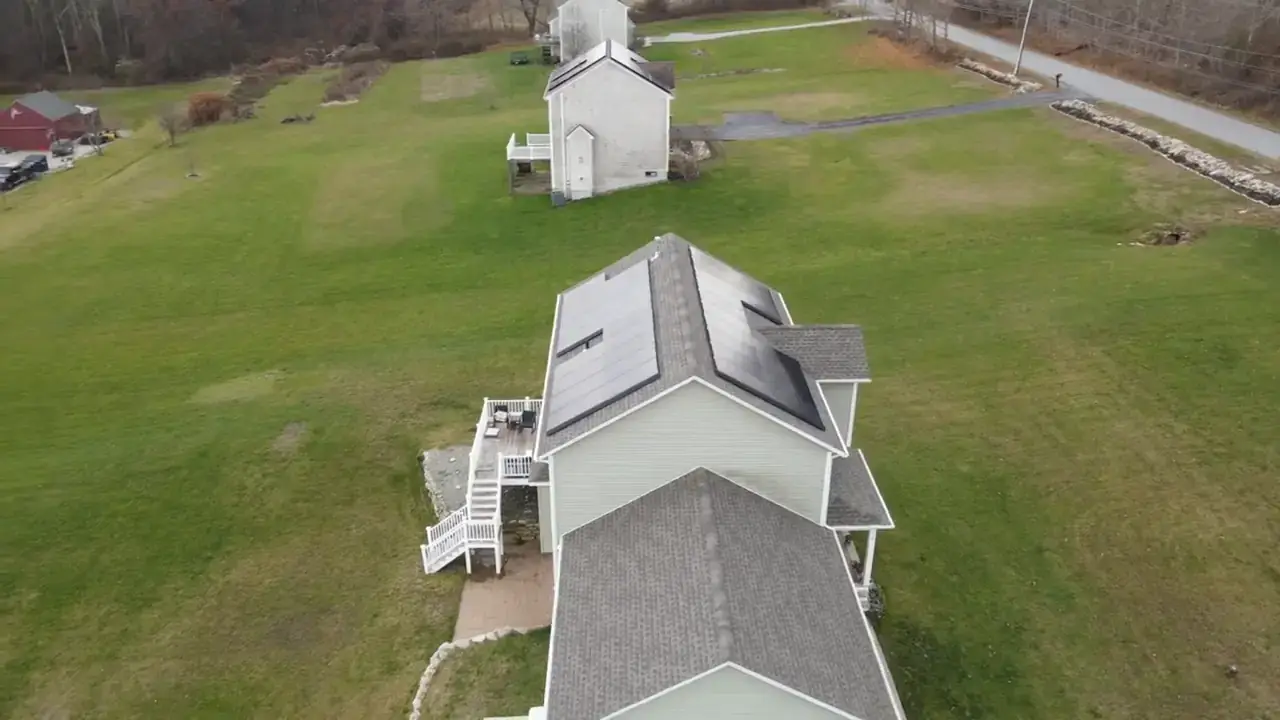
Yes, and better than most people expect. Solar power in Connecticut produces across all four seasons. Panels produce from daylight, not heat, and cold improves panel efficiency. Connecticut gets enough annual sun for strong production, with the lowest months in December and January and peak months from April through September. Modern N-type panels hold output in low light, and snow slides off tilted panels quickly. See do solar panels work on cloudy days for what to expect by season.

Batteries Turn Solar Power Into Backup Power
Connecticut’s Energy Storage Solutions program pays incentives for home batteries, with an upfront payment and performance payments for sharing stored power during peak demand events. Pairing a battery with your panels keeps essential circuits running through outages and improves your economics under either tariff. A battery turns solar power in Connecticut into backup for the next outage. We design battery storage systems with FranklinWH equipment.
FAQs About Solar Power in Connecticut
Is solar power worth it in Connecticut in 2027?
For most homes with reasonable sun exposure, yes. Rates are rising, the state pays for production under a 20-year tariff, and equipment warranties now reach 30 years. The exact answer depends on your roof and usage, which is what a free design tells you. Solar power in Connecticut pays back through the tariff and every kilowatt-hour you stop buying.
How much does solar power cost in Connecticut?
It depends on system size, roof complexity, equipment, and financing, so treat any price you see online as a placeholder. The number that matters is your monthly cost with solar versus without it, and we put that comparison on page one of every proposal.
Is off-grid solar possible in Connecticut?
Nearly all Connecticut solar homes stay grid-connected, because the RRES tariff pays you for production and the grid covers winter nights. Batteries provide outage backup without giving up the tariff.
What size system does a Connecticut home need?
A typical home offsets most of its usage with a system sized from your last 12 months of bills. Start with how many solar panels are needed to power a house.
Get Your Numbers at the 2027 Rate
Send us a recent electric bill and we will model your production, your tariff choice, and your monthly savings at both the current rate and the filed 2027 rate. Get your free estimate or call (860) 969-4006.
CT Lic. #HIC.0659657
Get our Connecticut solar and roofing updates first in Google. Add Premier Improvements as a preferred source.