
Selling a House With Solar Panels in Connecticut
Selling a house with solar panels in Connecticut? Owned panels sell with the house. A leased or power purchase agreement (PPA) system belongs to the finance company. The buyer takes over the contract, or you buy it out before closing. See what happens to owned, financed, and leased systems at closing, then work through the checklist that matches yours.
- Veteran-Owned and Women-Owned
- CT Green Bank Smart-E Contractor
- REC Certified Installer
- Certified FranklinWH Installer
- CT Lic. #HIC.0659657
Your Checklist for Selling a House With Solar Panels
Owned solar panels sell with the house like any other upgrade. A leased or power purchase agreement (PPA) system stays the finance company's property. The buyer takes over the contract, or you buy it out before closing.
This checklist is general information, not legal advice. Your attorney and your contracts set the terms of your sale.
What Happens to Solar Panels When You Sell
Three things shape the sale: who holds title to the panels, what the buyer's lender needs, and which utility program the home is on.
| Question | Paid in full | Solar loan | Lease or PPA |
|---|---|---|---|
| Who holds title | You | You. Check for a UCC-1 filing by the lender. | The finance company |
| At closing | The panels sell with the house. | You pay the loan off, or handle it as the loan contract allows. | The buyer takes over the contract, or you buy it out first. |
| Appraisal on a Fannie Mae loan | Standard appraisal rules apply to the panels. | The panels count only when the loan papers show the lender has no right to repossess them. | The panels stay out of the appraised value. |
| Property tax | Exempt under state law for a qualifying home system, owned or leased. | ||
| Utility program | It stays with the home. The buyer keeps the same program. | ||
The appraisal row comes from Fannie Mae's Selling Guide, dated November 4, 2026. FHA, VA, and other loans follow their own rules, so ask the buyer's lender.
Your Utility Program After the Sale
The billing program belongs to the home. What the buyer does next depends on when your system went live.
Homes on Net Metering
Net metering is closed to new enrollment. State law covers systems approved by December 31, 2021 and runs their credit through December 31, 2041. Eversource says a buyer gets the chance to continue net metering when the account moves into the buyer's name. The buyer completes an Interconnection Transfer form. Eversource cashes out your banked kWh as of your move date.
Homes on RRES: Netting or Buy-All
Systems that applied on or after January 1, 2022 sit in the Residential Renewable Energy Solutions program. Eversource and United Illuminating (UI) say the program type stays with the home. The buyer keeps Netting or Buy-All, whichever you enrolled in, and a Buy-All home keeps the rate first assigned to it. The program runs on a 20-year term, so tell the buyer the year your system enrolled. If incentive payments go out by direct payment, ask the utility for the Tariff Payment Beneficiary change form.
In UI territory, call UI to confirm its net metering transfer steps. For the full program rules, read our guide to Connecticut net metering and RRES.
Selling With a Solar Lease or PPA
Start early. Your contract names the transfer steps, the fees, and the buyout price. You have two paths.
- Transfer. The buyer applies to take over the agreement and its remaining payments.
- Buyout. You pay off the contract and sell the system as owned.
Connecticut's Residential Property Condition Report lists solar devices under Leased Equipment. State law has you give that report to the buyer before the buyer signs a binder or a purchase contract. A seller who fails to furnish the report owes the buyer a $500 credit at closing.
The buyer's lender has a say too. On a Fannie Mae loan, the lender reviews the lease or PPA. The lease payment counts in the buyer's debt-to-income ratio unless the lease guarantees a set amount of energy for a fixed payment. The U.S. Department of Energy reports that third-party-owned systems add some complexity to a sale, with mostly neutral effects on price and time on market.
Selling With a Solar Loan
You hold title to the panels, and the loan is your debt. Ask your lender two questions. What is the payoff amount? Does the loan allow a transfer to the buyer?
A lender that takes the panels as collateral records a UCC-1 financing statement. In Connecticut, a fixture filing goes in the town land records, and other UCC filings go to the Secretary of the State. The buyer's lender reads the title report for these, so have the filing released when you pay the loan. New to the terms? Read what a solar loan is.
What Buyers Have Paid for Homes With Owned Solar
A Lawrence Berkeley National Laboratory study covered 22,822 home sales in eight states from 2002 to 2013. Buyers paid about $15,000 more for a home with an average-size owned system. Zillow reported in 2019 that homes with solar sold for 4.1 percent more on average nationwide.
Both figures are national, and both are years old. Treat them as background, not as an estimate for your home. The U.S. Department of Energy points sellers and appraisers to the PV Value tool, which prices the energy a system produces. For more, read do solar panels increase home value.
Do Solar Panels Raise Property Taxes in Connecticut?
Not for a qualifying home system. State law exempts solar installed on or after October 1, 2007 on a home with one to four units. The system must be sized to the home's own electric use. Leased systems qualify too. The exemption starts with a written application to the town assessor, due by November 1. Confirm yours is on file before you list.
Selling soon? We answer questions about your system before you list.
How We Help Before You List
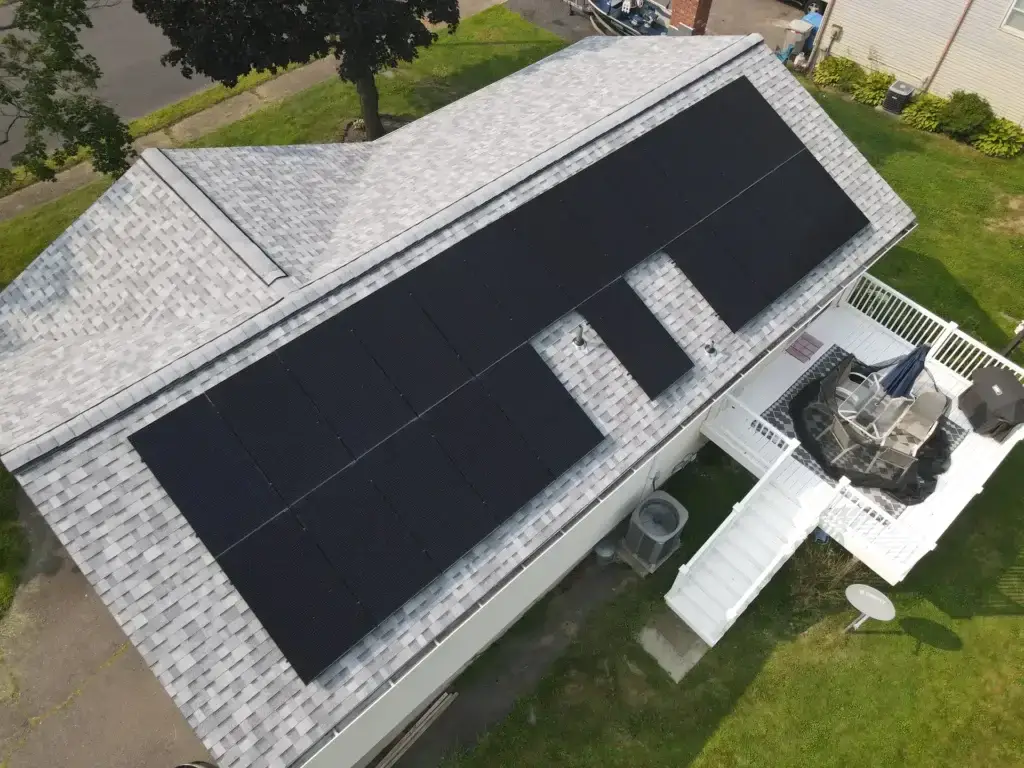
Buyers ask about the panels and the roof under them. We get both ready.
- Solar service for systems any company installed.
- An inspection of the panels, wiring, inverters, and roof attachments.
- Repairs for low production, inverter faults, and monitoring that went offline.
- Panel removal and reinstall when the roof needs work before the sale.
- A new Owens Corning roof and the panel reset from one company.
Questions About Selling a House With Solar Panels
Do solar panels transfer to the buyer when you sell a house in Connecticut?
Owned panels sell with the house. A leased or PPA system belongs to the finance company, so the buyer takes over the contract or the seller buys it out before closing.
Do I have to pay off my solar loan when I sell my house?
Your loan contract decides. Ask your lender for a payoff statement and whether the loan allows a transfer to the buyer. Have the lender release any UCC-1 filing on the panels when the loan is paid.
Does the buyer keep my net metering or RRES program?
The program stays with the home. Eversource says a buyer continues net metering by completing an Interconnection Transfer form. Under RRES, Eversource and UI say the buyer keeps the same Netting or Buy-All program, and a Buy-All home keeps its original rate.
Do solar panels raise property taxes in Connecticut?
Not for a qualifying home system. State law exempts solar installed on or after October 1, 2007 on a home with one to four units. The system must be sized to the home's own electric use. The exemption needs a written application to the town assessor.
Do I have to disclose a solar lease when I sell a house in Connecticut?
Yes. Connecticut's Residential Property Condition Report asks about leased equipment that must transfer to the buyer, and it lists solar devices by name.
Does a home appraisal count solar panels?
On a Fannie Mae loan, standard appraisal rules apply to panels you paid for in full. Leased and PPA panels stay out of the appraised value. Other loan types set their own rules.
Sources
- Connecticut General Statutes Section 12-81(57): property tax exemption for home solar
- Connecticut General Statutes Sections 20-327b and 20-327c: Residential Property Condition Report
- Connecticut General Statutes Section 16-243h: net metering credit
- Connecticut General Statutes Section 42a-9-501: where UCC filings go
- Eversource: Connecticut net metering
- Eversource and UI: Residential Renewable Energy Solutions FAQ, published January 1, 2026 (PDF)
- Fannie Mae Selling Guide B2-3-04: properties with solar panels
- U.S. Department of Energy: Homeowner's Guide to Going Solar
- U.S. Department of Energy, OSTI: Selling Into the Sun, Lawrence Berkeley National Laboratory (2015)
- Zillow: homes with solar panels sell for 4.1 percent more (April 16, 2019)
- CT Department of Consumer Protection: real estate forms
Last reviewed November 2026 by Adam H. Cooke, Premier Improvements.
Call Now or Request Your Estimate.
CT Lic. #HIC.0659657